There’s No Single Right Answer, Just the Right One for This Trip

Ask ten different people the best way to get to Perth Airport and you’ll get ten confident, contradictory answers, because the honest truth is that it depends entirely on the specifics of the trip. A solo traveller with a backpack heading to a domestic flight has a completely different set of priorities to a family of five with a fortnight’s worth of luggage catching an international flight at 5am. Someone flying out for a two day work trip cares about different things to someone leaving the car behind for three weeks.

This page runs through the four realistic options  taxi, the airport train line, long term parking, and rideshare apps  honestly, including where each one falls short, so the comparison actually means something rather than just being a sales pitch dressed up as a comparison guide. By the end, the goal isn’t to convince you that one option wins every single time. It’s to make it obvious which one wins for the specific trip you’re actually planning.

Taxi: The Case For It

A pre booked taxi is a door to door service  no dragging luggage to a train platform, no walking between a car park and a terminal, no waiting at a rideshare pickup zone hoping a driver actually accepts the trip. You’re collected from your front door, or a hotel lobby, or wherever you actually are, and dropped directly at the terminal kerb.

Where it wins Early morning departures are the clearest case. A flight before 5am rules out the train (which doesn’t run at that hour) and makes rideshare genuinely unreliable, since fewer drivers are circulating and cancellations spike. A pre booked taxi with a driver assigned the night before removes that risk almost entirely. It’s also the strongest option for anyone travelling with a lot of luggage, young children, or mobility needs, since there’s no walking involved beyond getting from the car to check in. And for groups, a maxi taxi covering everyone in one vehicle beats splitting across multiple train tickets or two separate rideshare cars.

Where it’s less essential  For a solo traveller with light luggage on a mid morning weekday flight, departing from somewhere directly on the train line, a taxi’s door to door convenience is a genuine nice to have rather than a necessity  the train covers that trip perfectly well.

The cost consideration  A flat rate taxi fare is priced by distance and vehicle type, and doesn’t move depending on the time of day, unlike rideshare pricing. For longer trips from outer suburbs, or trips at times when rideshare surge pricing tends to spike, a taxi is often either comparable in cost or cheaper, while removing the uncertainty rideshare pricing carries.

The Airport Train Line: What It Actually Involves

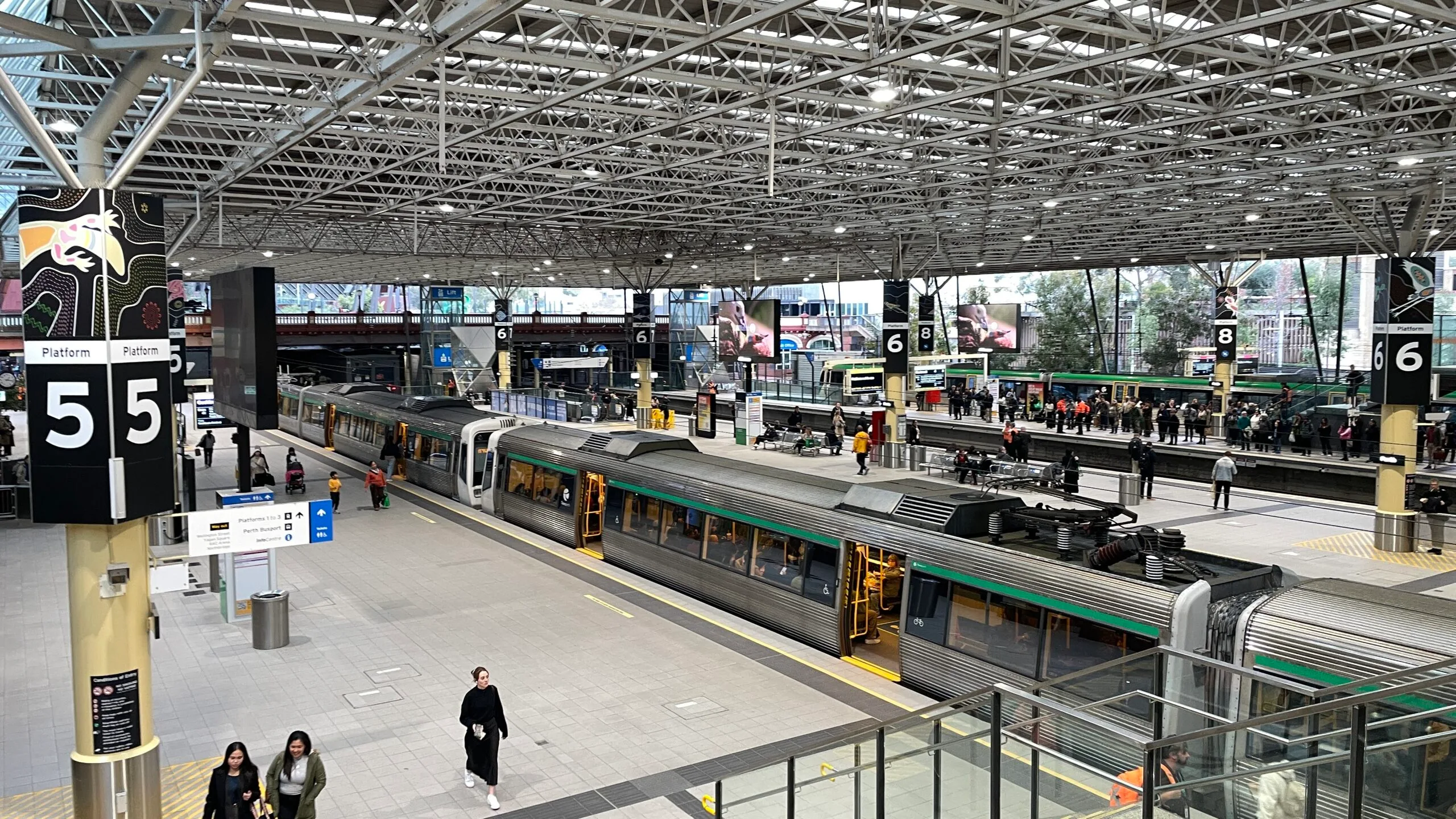
Perth’s airport train line connects directly to Airport Central station, situated between the domestic and international terminals, with a free shuttle bus covering the final stretch to whichever specific terminal you need. It’s a genuinely useful addition to Perth’s transport options and, for the right trip, the cheapest and most time-predictable way to get to the airport by a clear margin.

Where it wins For a solo or light luggage traveller departing from somewhere reasonably close to a station on the line, during the hours the train actually operates, it’s hard to beat on cost and predictability. There’s no traffic to sit in, no surge pricing, and a train timetable is about as fixed a variable as transport gets.

Where it falls short  The train doesn’t run 24 hours a day, which immediately rules it out for genuinely early or late flights. It also requires getting to a station in the first place for anyone not living within easy reach of the line, that first leg (a drive, a taxi, a bus) adds complexity and time that can eat into the savings. Then there’s the shuttle bus connection at Airport Central, an extra step that adds time and, more importantly, adds a small window of uncertainty for anyone running close to a boarding time. Luggage is the other real limitation — navigating stairs, platforms, and a shuttle bus transfer with two large suitcases and a toddler is a meaningfully different experience to doing the same trip solo with a backpack.

The honest verdict The train is an excellent option for a specific, fairly common trip profile  solo or paired travellers, light luggage, a flight departing at a reasonable hour, starting from somewhere near the line. Outside that profile, its advantages shrink fast.

Long Term Parking: What It Really Costs

Driving yourself and leaving the car in long term parking feels like the default option for a lot of travellers, mostly because it doesn’t require booking anything in advance or relying on someone else’s schedule. But it’s worth actually running the numbers before assuming it’s the cheapest choice, because for anything beyond a short trip, it often isn’t.

Where it wins  For a short trip  a day or two, maybe a long weekend  parking can genuinely be the most cost effective option, particularly if there are multiple people travelling together who’d otherwise need two taxi fares or two train tickets. It also offers a kind of control the other options don’t: you leave on your own schedule, with your own vehicle, without waiting on anyone else.

Where it falls apart Daily parking rates add up fast, and for a trip longer than about a week, the accumulated cost frequently exceeds what a taxi transfer both ways would have cost. There’s also the return trip problem, which gets its own section further down this page, but the short version is: arriving home after a long flight, exhausted, and then needing to navigate an airport car park and drive yourself home is a genuinely worse experience than most people account for when they’re booking the outbound leg.

The often overlooked cost  Parking fees are the obvious cost, but there’s a real, harder to quantify cost too  the mental load of remembering which car park, which level, which bay, after a long flight when you’re running on very little sleep. It’s not nothing, and it’s worth weighing against the convenience parking offers on the way out.

Rideshare Apps: Where They Genuinely Work Average

Rideshare apps are genuinely useful for a lot of everyday trips, and it would be dishonest to write a comparison page pretending otherwise. The question isn’t whether they’re good in general  it’s whether they’re the right choice specifically for an airport trip, where the stakes of something going wrong are higher than a normal local ride.

Where it wins  For a short, low stakes, daytime trip from somewhere central, where a missed or delayed pickup wouldn’t seriously threaten your flight, rideshare can be quick, convenient, and reasonably priced. If you’re already comfortable with the app and it’s a familiar route, there’s not much reason to overthink it.

Where it genuinely struggles. Early morning departures are the clearest weak point  driver availability drops off sharply before 5am, and cancellations become noticeably more common exactly when there’s the least buffer to recover from one. Surge pricing is the other well documented issue, and airport trips are particularly exposed to it: a wave of flights landing around the same time creates a sudden spike in pickup demand right as the algorithm notices and adjusts pricing upward. Arrivals pickups carry their own version of this problem  a driver matched to a scheduled time rather than your actual flight status can mean either an awkward wait or, worse, no driver showing up at all if your flight lands early and the original match window has passed.

The honest middle ground  Rideshare works fine for plenty of airport trips. It’s specifically the trips with the least margin for error  an early flight, a tight connection, bad weather, a major event nearby driving up demand  where its structural weaknesses show up most, and those happen to be exactly the trips where the consequences of something going wrong are highest.

Ellenbrook town centre street with cafes and traffic, Ellenbrook WA

Which Option Actually Suits Your Trip

Rather than a single verdict, here’s how this tends to break down by traveller type.

Solo traveller, light luggage, daytime flight, live near the train line: The train is hard to beat here  cheap, predictable, no traffic to worry about.

Family with kids and a lot of luggage, any time of day: A maxi taxi solves the luggage and headcount problem in one booking, without the logistics of navigating stairs and a shuttle transfer with prams and suitcases, or splitting into multiple train fares.

Early morning departure, any traveller type: A pre booked taxi is the most reliable option by a clear margin. The train isn’t running yet, and rideshare reliability is at its weakest exactly during this window.

Short trip of a day or two, comfortable driving yourself: Parking can genuinely be the cheapest option here, provided the return trip after a short absence doesn’t involve significant fatigue.

Longer trip, a week or more away.:Worth running the actual numbers on parking fees versus a taxi both ways  the accumulated daily rate often tips the balance toward a transfer service being the more cost effective choice, not just the more convenient one.

International arrival, jetlagged, landing at an unpredictable time: A pre booked taxi with flight tracking adjusts to your actual landing time rather than a scheduled one, and means the trip home doesn’t involve driving yourself while running on minimal sleep.

Business trip, tight schedule, punctuality matters. A taxi’s pre assigned driver and flat, predictable pricing tend to suit this better than hoping a rideshare match comes through smoothly on a morning where being late has real professional consequences.

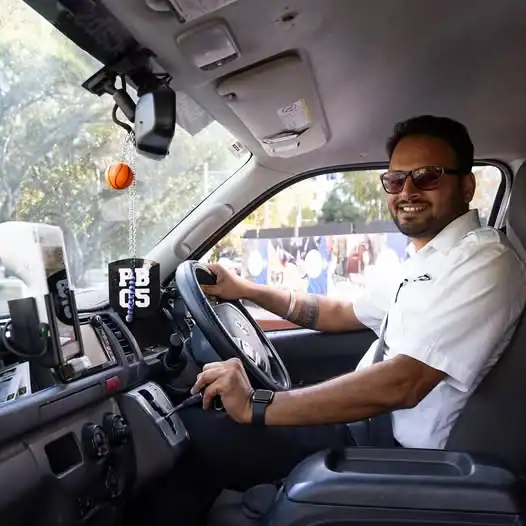
Nova Taxi driver behind the wheel, Perth taxi service

What Nobody Tells You About the Return Trip

Almost every comparison of airport transport options focuses entirely on the outbound leg getting to the airport and barely mentions the trip home, which is often the harder half of the journey.

Think about what the return trip actually looks like for each option. Parking means finding your car, possibly in an unfamiliar level of a car park you only vaguely remember, then driving yourself home while running on very little sleep after a long or overnight flight  not an ideal combination. The train means navigating a shuttle bus, then stairs and a platform, with all your luggage, after however many hours you’ve just spent travelling. Rideshare means hoping a driver’s available and willing to make the trip, potentially at an hour when demand and pricing are both working against you, with a pickup point that can be confusing at a busy arrivals area.

A pre booked taxi, by contrast, is arguably at its best exactly on the return leg. Flight tracking means the pickup adjusts to your actual landing time rather than a scheduled one that may no longer be accurate. There’s no navigating a car park, no shuttle bus, no hoping a rideshare driver is nearby and willing to take the trip. You walk out of the terminal, and the car’s there.

This is worth weighing properly when comparing options, rather than optimising purely for the cheapest or most convenient way to leave, since the return trip  tired, jetlagged, often carrying more luggage than you left with is frequently the part of the journey people are least prepared to handle well.

A Few Real Trips, Worked Through Properly

Comparisons are easier to trust when they’re tested against actual trips rather than staying in the abstract.

A backpacker flying out solo for a weekend trip, living a few stops from an Airport Line station, departing at 10am. The train wins comfortably here. Cheap, no traffic, no surge pricing, and light luggage means the shuttle bus transfer at Airport Central is barely an inconvenience. Booking a taxi for this specific trip would be paying for convenience that isn’t really needed.

A family of five flying out for a two week holiday, 6am departure, two prams and six suitcases between them. This is close to the ideal case for a maxi taxi. The train’s shuttle bus transfer with that much luggage and that many small children would be genuinely difficult, parking for two weeks would rack up a substantial bill, and rideshare at 6am with a family this size would likely mean two separate bookings and the associated cancellation risk. One maxi taxi, booked the night before, solves the whole trip in a single decision.

A business traveller doing a quick two-day trip, comfortable driving, wants to minimise cost. Parking is a reasonable call here. Two days of parking fees is unlikely to exceed a return taxi fare, and the traveller’s own schedule and comfort with driving mean the convenience of self-driving outweighs the marginal savings elsewhere.

A couple returning from a three-week European holiday, landing at 11pm after over twenty hours of travel. This is where the return-trip argument matters most. Driving themselves home from a car park after that kind of trip is a genuinely rough proposition. A pre-booked taxi with flight tracking, arranged before they even left, removes the single hardest logistical piece of an otherwise straightforward trip home.

A group of eight friends heading to a bucks or hens weekend interstate, early Saturday flight. Splitting into rideshare cars this early, for a group this size, carries real cancellation risk and would likely mean at least two separate surge-priced bookings. A single maxi taxi, booked ahead, keeps the group together and avoids the early-morning driver-availability problem entirely.

These aren’t hypothetical edge cases. They’re close to the actual range of trips people are weighing when they start comparing these four options, and working through them properly tends to make the right choice for a specific trip fairly obvious, even when there’s genuinely no universal answer.

One more worth including, since it comes up often: a solo traveller flying out for a work conference, comfortable with any of the four options in principle, but needing to be genuinely certain about arrival time because a missed check-in window means missing the whole reason for the trip. For this profile, the deciding factor usually isn’t cost at all — it’s which option carries the least variance. The train’s fixed timetable is reliable but adds a transfer step; a taxi removes that step entirely and adds a pre-assigned driver on top. For a trip where being on time matters more than saving a few dollars, that combination of certainty tends to outweigh everything else on this page.


Professional chauffeur opening car door for corporate taxi transfer

Weather, Traffic and the Variables Comparison Tables Miss

A static comparison table is useful, but it can’t capture how much these options shift under real-world conditions that change from one day to the next.

Perth traffic on the Kwinana Freeway or Tonkin Highway during peak hour can add a genuinely significant amount of time to a car-based trip — taxi, rideshare, or self-driving to parking — in a way the train, running on a dedicated line, simply isn’t exposed to. On a bad traffic day, the train’s time advantage over road-based options widens considerably, which is worth factoring in for anyone travelling during weekday peak periods.

Weather cuts the other way for rideshare specifically. Heavy rain or storms are one of the most reliable triggers for surge pricing, precisely because demand for covered transport spikes right as driver availability doesn’t keep pace. A taxi’s flat fare doesn’t respond to this at all, and the train obviously isn’t affected by rain in the same way road pricing is. Parking, similarly, is unaffected by weather in terms of cost, though driving in heavy rain adds its own stress to an already tiring pre-flight or post-flight drive.

Major events — a big concert, a football final, a public holiday long weekend — tend to compress all of these effects at once: more road traffic, higher rideshare demand and pricing, and often busier trains too. None of this changes which option is fundamentally best suited to a given trip type, but it’s worth building in extra buffer time regardless of which option you choose when travelling around a known busy period.

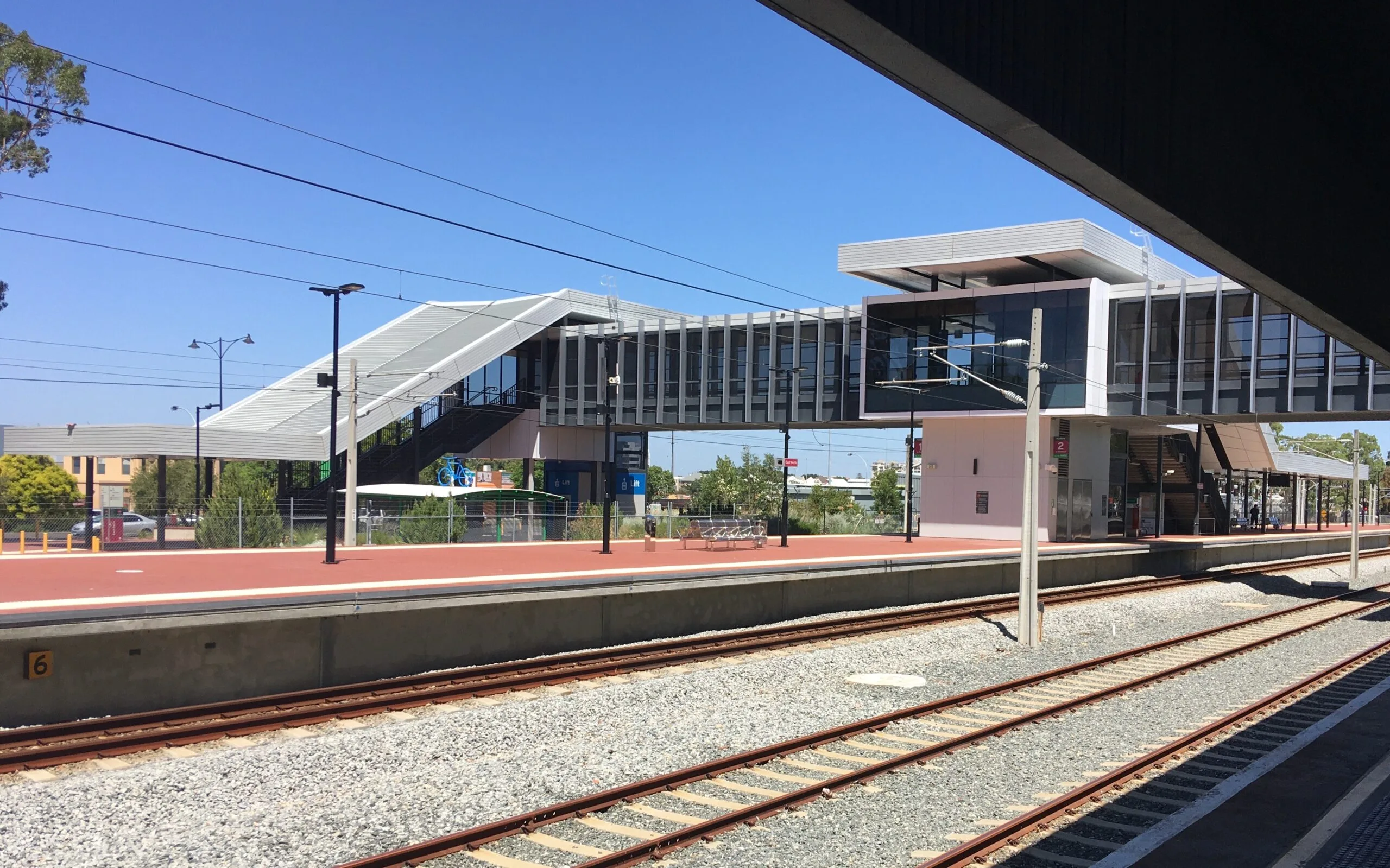
Aerial view of Ellenbrook train station and platforms, Ellenbrook WA

Book Your Perth Airport Transfer

However the rest of your trip is shaping up, the airport transfer shouldn’t be the part you’re stressed about. For early departures, big luggage loads, groups, or a return trip you’d rather not navigate while jetlagged, book a taxi with flight tracking and a driver assigned in advance.

None of the four options covered on this page is universally right, and any guide that tells you otherwise is selling something rather than actually helping you plan. The train is genuinely excellent for the trip it’s built for. Parking makes sense for short, self-driven trips where cost is the priority. Rideshare is fine for low-stakes daytime travel. And a taxi earns its place specifically in the situations where the other three options show their weaknesses  early mornings, heavy luggage, groups, unpredictable flight timing, and the exhausted trip home that every comparison guide seems to forget about until it’s actually happening to you.

📅 Book Your Nova Taxi Online Now 📞 Call 24/7 Dispatch: 1300 081 911

Related guides:

What Our Customers Say

I booked a maxi cabs for a family outing, and it was perfect. Spacious, clean, and the driver was very professional.

Sarah M.

Booking a ride with Nova Taxi was a great decision. The taxi was clean, comfortable, and reliable — and the fare was very reasonable

Sarsha

Excellent service! The booking was easy, the taxi was spotless, and I felt completely safe throughout the ride

Alan Grace

Nova Taxi made my airport transfer stress-free. The driver arrived on time, helped with luggage, and the ride was smooth and comfortable

David P.

Frequently Asked Questions

Everything You Need

For a solo traveller with light luggage on a route near the train line, the airport train is generally the cheapest option. For longer trips, parking fees often exceed what a taxi transfer both ways would cost, so it's worth comparing the total cost rather than just the per-day parking rate.

No. The train line operates on a set timetable and doesn't run through the very early morning or late night hours, which rules it out for early departures or late arrivals.

Not usually. Taxi fares are flat-rate based on distance and vehicle type, while rideshare pricing responds to real-time demand and can spike considerably during peak periods, bad weather, or major events, particularly around the airport.

Booking the day before, or at least several hours ahead, is recommended for early-morning departures, since this allows a driver to be assigned in advance rather than matched on the morning itself.

For a trip of a day or two, parking can be a cost-effective option, particularly for a solo traveller or couple. For longer trips, it's worth calculating the total parking cost against a taxi transfer, since daily rates accumulate quickly.

Yes, A maxi taxi seats up to 13 passengers with significantly more luggage space than a standard car, making it well suited to family airport trips that a train or a single rideshare car can't comfortably handle.

Drivers track your flight number in real time and adjust the pickup accordingly, so an early or delayed landing doesn't leave you waiting or without a ride.

A pre-booked taxi tends to work best here, since it avoids navigating a car park or public transport while fatigued, and flight tracking means the pickup matches your actual arrival time rather than a fixed schedule.

Same day bookings are often possible depending on availability, but advance booking is recommended for early departures or peak travel periods to guarantee a driver is assigned ahead of time

It tends to work fine for daytime, low-stakes trips from central areas. It's specifically early mornings, late nights, and high-demand periods where reliability and pricing become less predictable.

No, The train runs on a dedicated line and isn't exposed to road traffic delays the way car-based options are, which can make it noticeably faster during peak-hour congestion on routes like the Kwinana Freeway or Tonkin Highway.